
The Future of Legal Education and Practice in Pakistan: Innovation, Excellence, and Impact
Continuous Professional Development for the 21st Century Legal Community
3 February 2026




Pakistan’s legal profession is experiencing significant transformation driven by technological innovation, emerging areas of law, and evolving standards of professional conduct. Artificial intelligence is reshaping legal research and practice management, while new domains such as data privacy, climate change, and alternative dispute resolution require specialised expertise. Courts, too, are adopting digital systems for case management and filing. Alongside these technological advances, foundational challenges around professional ethics, courtroom decorum, and workplace culture demand equal attention. Ensuring ethical legal practice, maintaining respect and dignity in legal settings, and fostering inclusive, harassment-free workplaces are essential to sustaining confidence in the legal system, particularly for young lawyers. These multifaceted developments create opportunities while demanding comprehensive, coordinated responses across the legal education continuum: from law school curricula and bar vocational courses to continuing legal education and judicial training. Ensuring that capacity-building systems evolve strategically to address both technological competencies and foundational professional standards is essential for expanding the diverse talent pipeline, strengthening institutional credibility, and maintaining excellence in Pakistan’s legal system.
This National Conference on “The Future of Legal Education and Practice in Pakistan: Innovation, Excellence, and Impact” provided a collaborative platform for stakeholders to address these multifaceted challenges constructively. Organised by the Research Society of International Law (RSIL) in partnership with the Pakistan Bar Council’s Directorate of Legal Education (PBC-DLE), the conference convenes diverse stakeholders from across Pakistan’s legal ecosystem: Bar Councils overseeing professional standards, law schools shaping curricula, judicial academies training judges, legal practitioners navigating ethical dilemmas and technological challenges, legal technology innovators developing digital solutions, civil society organisations advancing access to justice, and government bodies implementing reforms.
The event provided a collaborative platform for stakeholders to address continuous professional development across four interconnected pillars:
1. Initial legal training (law school curricula and clinical education)
2. Professional development for lawyers (Bar Vocational Course and Continuing Legal Education)
3. Professional development for judges (specialised training and career-long learning),
4. Contemporary professional challenges (legal ethics, courtroom decorum, technology integration, and inclusive workplaces).
The conference began with an opening plenary focused on raising professional standards.
Interactive demonstrations showcased legal AI tools and platforms, including DigiLawyer, EnablifyAI, AI Attorney, and Pakistan Law Bot. Key digitisation initiatives were also presented by the Ministry of Law and Justice.
Parallel breakout sessions examined curriculum modernisation, CLE/BVC strengthening, judicial training, and technology adoption.
A high-level panel discussed modernising justice delivery. Together, these sessions fostered multi-stakeholder dialogue and practical design work to generate actionable recommendations.
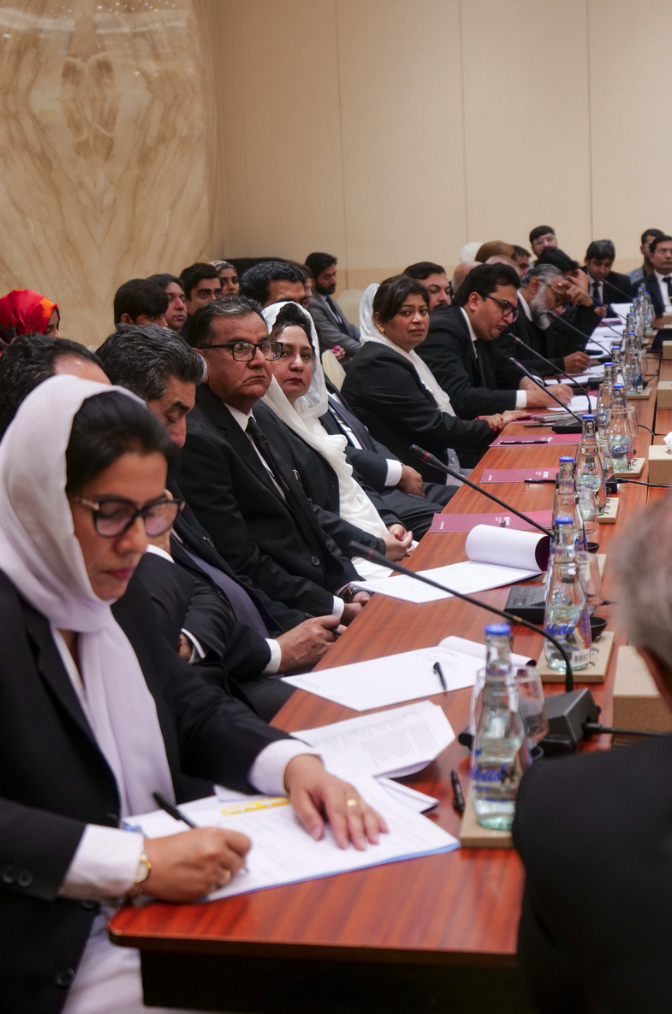
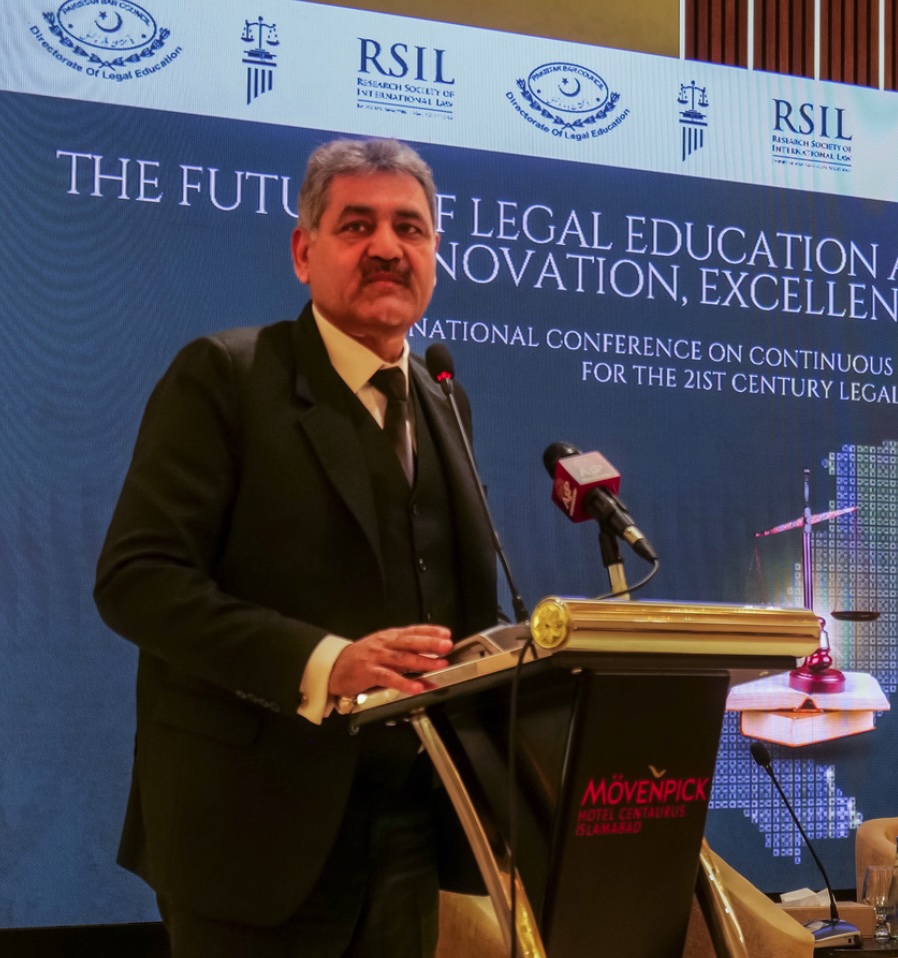
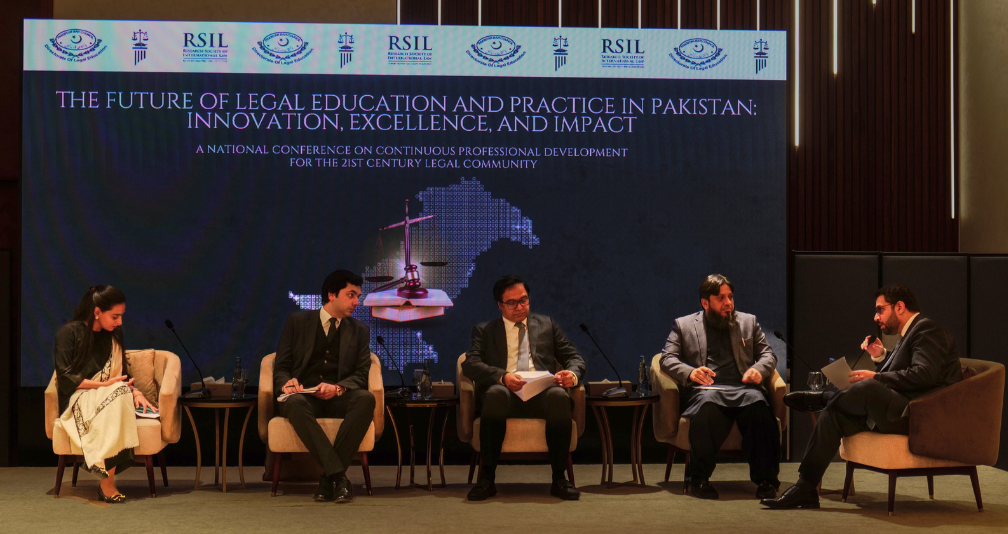
The dialogue convened diverse representatives from Bar Councils, law schools, judicial academies, independent practitioners, legal technology innovators, and government bodies including the Ministry of Law and Justice. Key focuses included fostering sustained inter-institutional collaboration, producing concrete proposals for curriculum enhancement and CLE improvements, showcasing promising innovations in legal education and technology, and establishing pathways for piloting reforms and long-term coordination to strengthen Pakistan’s legal ecosystem.