
Event 3 — Denning Law School, Hyderabad
- 21 January 2026
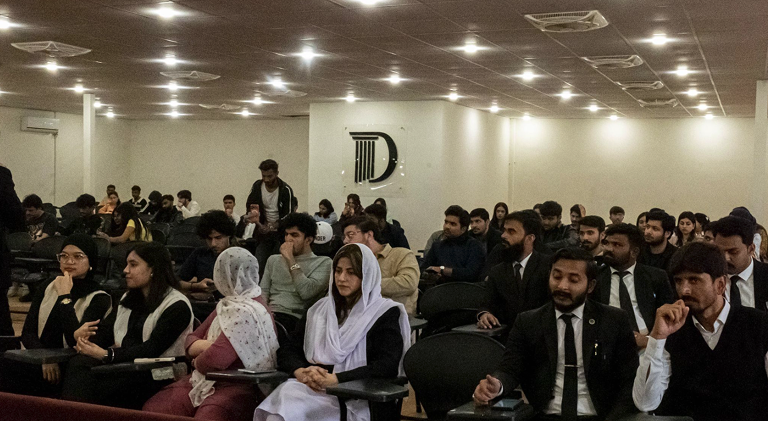
- 91 students
Speakers
- Muhammad Lutfullah Arain, Advocate Supreme Court – a senior advocate practising before the Supreme Court of Pakistan.
- Ms. Sidra Ali, Advocate High Court – a practising advocate at the Sindh High Court and currently preparing for district judiciary exams.
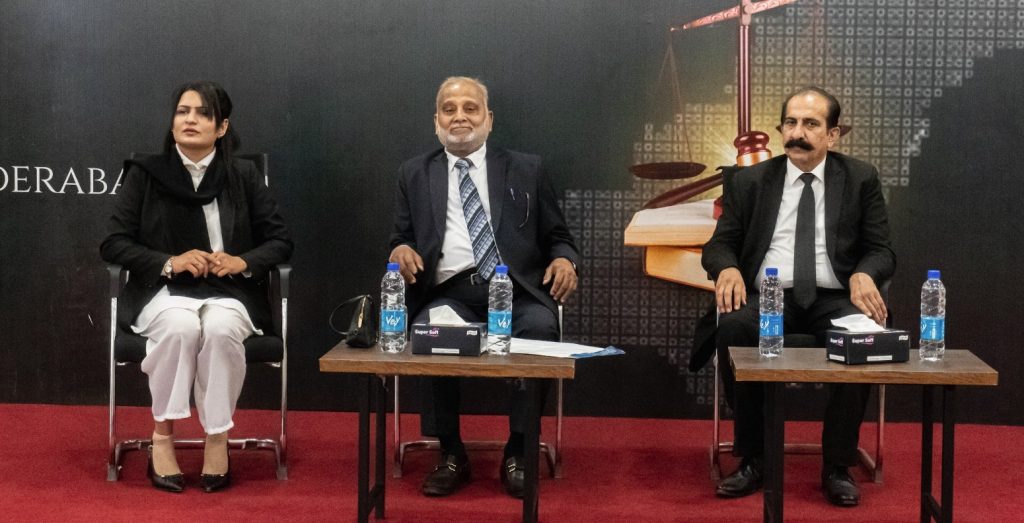
- Mr. Justice (Retd.) Abdul Rasool Memon, High Court of Sindh – a retired Judge of the High Court of Sindh who served on the bench from 2009 until his retirement in January 2021, having risen through the district judiciary of Sindh since 1977.
- Mr. Shahid Shafiq, Former District & Sessions Judge – a retired district judiciary judge with extensive trial court experience who now leads Denning Law School
The Hyderabad session generated focused discussion on the intersection of professional development and the judicial career pathway. Key exchanges included:
On bar politics and early career
Students asked whether juniors should get involved in bar politics from an early age. Speakers were consistent in their advice: spend the early years of your career building your practice and your professional network. If you develop genuine competence and standing, opportunities (including leadership within bar structures) will follow. Forced or premature engagement in politics risks distracting from the foundations that matter.
On bar politics and judicial careers
Students specifically asked whether involvement in bar politics could affect their prospects when sitting for judiciary examinations or once elevated to the bench. Speakers acknowledged that associations can carry weight, but reiterated that avoiding bar politics in the early career is the sounder approach for those with judicial ambitions.
On judicial reforms and the 27th Constitutional Amendment
Students raised concerns about the impact of the 27th Constitutional Amendment on the independence and quality of judicial appointments, expressing the view that competence is no longer the primary criterion and that the appointment process had become less transparent. This was one of the more candid exchanges of the event, reflecting students’ awareness of the political context surrounding the judiciary and their uncertainty about whether the judicial career pathway remains as meritocratic as they had hoped.