
Event 2 — Denning Law School, Karachi
- 20 January 2026
- 103 students
Speakers
- Barrister Zahrah Veyani, Advocate High Court, and Partner at ZSV Legal – a Barrister-at-Law (called to the Bar of England and Wales in 2008), Attorney at Law (New York), and Advocate of the High Courts of Pakistan with over fourteen years of litigation experience spanning civil, criminal, commercial, constitutional, and family law. She serves as Assistant Attorney General of Pakistan and is the founding CEO of the Women Lawyers Association, with a sustained track record in pro bono work and advocacy for women in the legal profession.
- Dr. Shabana Waheed, Former District & Sessions Judge – a retired member of the district judiciary with judicial experience at the trial court level in Sindh.
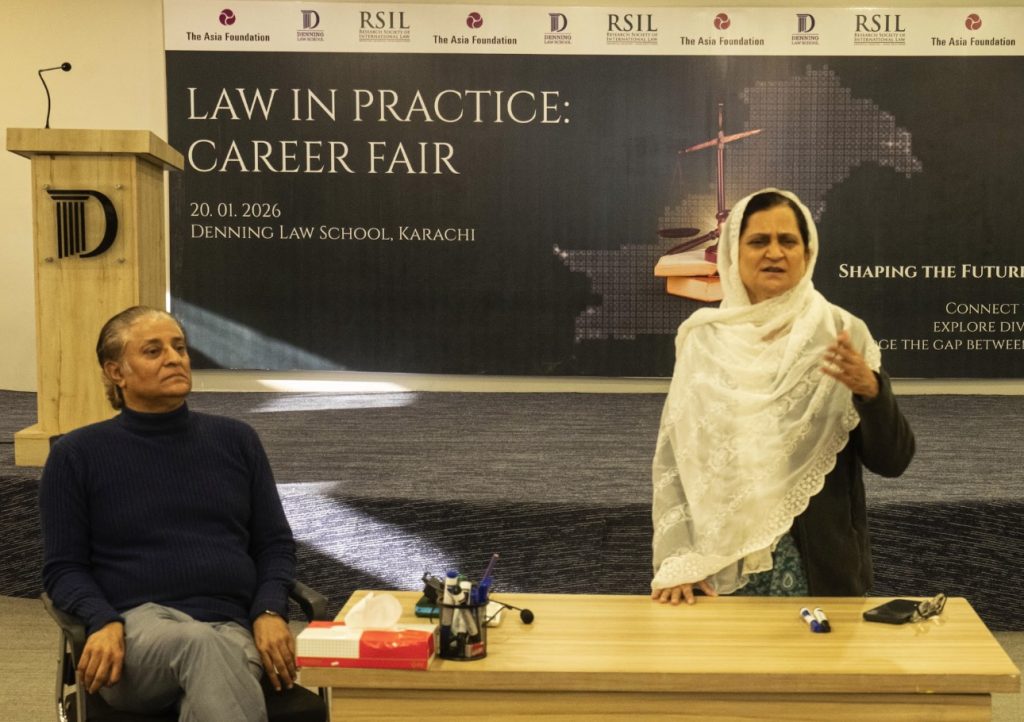
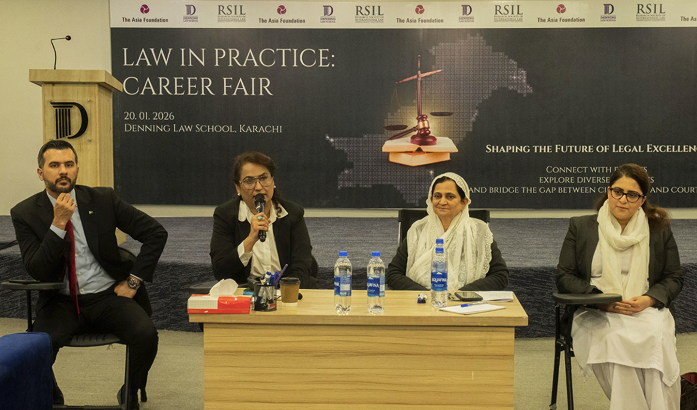
- Jamal Aziz, Executive Director, RSIL – a leading legal researcher and policy advisor who has overseen nearly 200 RSIL publications contributing to legislative reform and national policy, with extensive experience advising government ministries on criminal justice and rule of law.
- Mr. Shahid Shafiq, Former District & Sessions Judge – a retired district judiciary judge with extensive trial court experience who now leads Denning Law School
- Ms. Nazia Arif, Advocate High Court – a practising advocate at the Sindh High Court.
The Karachi session was the largest of the three events and generated particularly substantive discussion, with students raising a broad and sophisticated range of questions reflecting both their ambitions and their practical concerns about entering the profession. Key questions and exchanges included:
On mentorship and junior development
Students asked whether the profession allows juniors space to make mistakes and learn, and how senior practitioners can better bring juniors along in their development. Speakers emphasised that the relationship between a senior and junior lawyer is formative, and that a culture of mentorship, rather than exploitation, is what the profession needs to cultivate.
On career pathway decisions
Students questioned whether it was better to practise for a few years before aiming for High Court elevation, versus sitting for district judiciary exams after 2–3 years. Speakers walked through the trade-offs, noting that building practice experience before elevation tends to produce stronger judges, though individual circumstances vary.
On specialisation and exposure
Several students noted that their legal education had not made clear that there are distinct types of criminal litigation (including white collar crime) and expressed frustration at the lack of exposure to specialist practice areas during their studies. This echoed concerns raised at the February national conference about the gap between academic curricula and real-world legal practice.
On policy work
Students expressed interest in careers in legal policy and asked about pathways, requirements, and the skills needed. Speakers advised that mapping exercises and regulatory impact assessment are core competencies for policy work, and that internships with government bodies and civil society organisations are the most direct entry point.
On substantive law
Students asked questions about specific legal issues including guardianship law and the extent to which the Juvenile Justice System Act protects or violates fundamental rights — indicating their interest in engaging critically with the law beyond textbook study.
On avoiding common junior mistakes
Speakers advised students to follow cases from start to finish as the most important habit to build early. They strongly advised staying away from bar politics in the early years of practice, focusing instead on building competence and reputation.
Ms. Nazia Arif spoke directly about professional harassment in the legal workplace — a theme of particular significance given RSIL’s ongoing development of the anti-harassment course through the Praxis.pk platform. She described the reality of junior lawyers absorbing the frustration of seniors, the phenomenon of same-gender harassment including character assassination, and basic dignity issues such as the absence of adequate seating for women in court environments. Her remarks highlighted the importance of the structural changes and awareness training that the project is working to advance.